




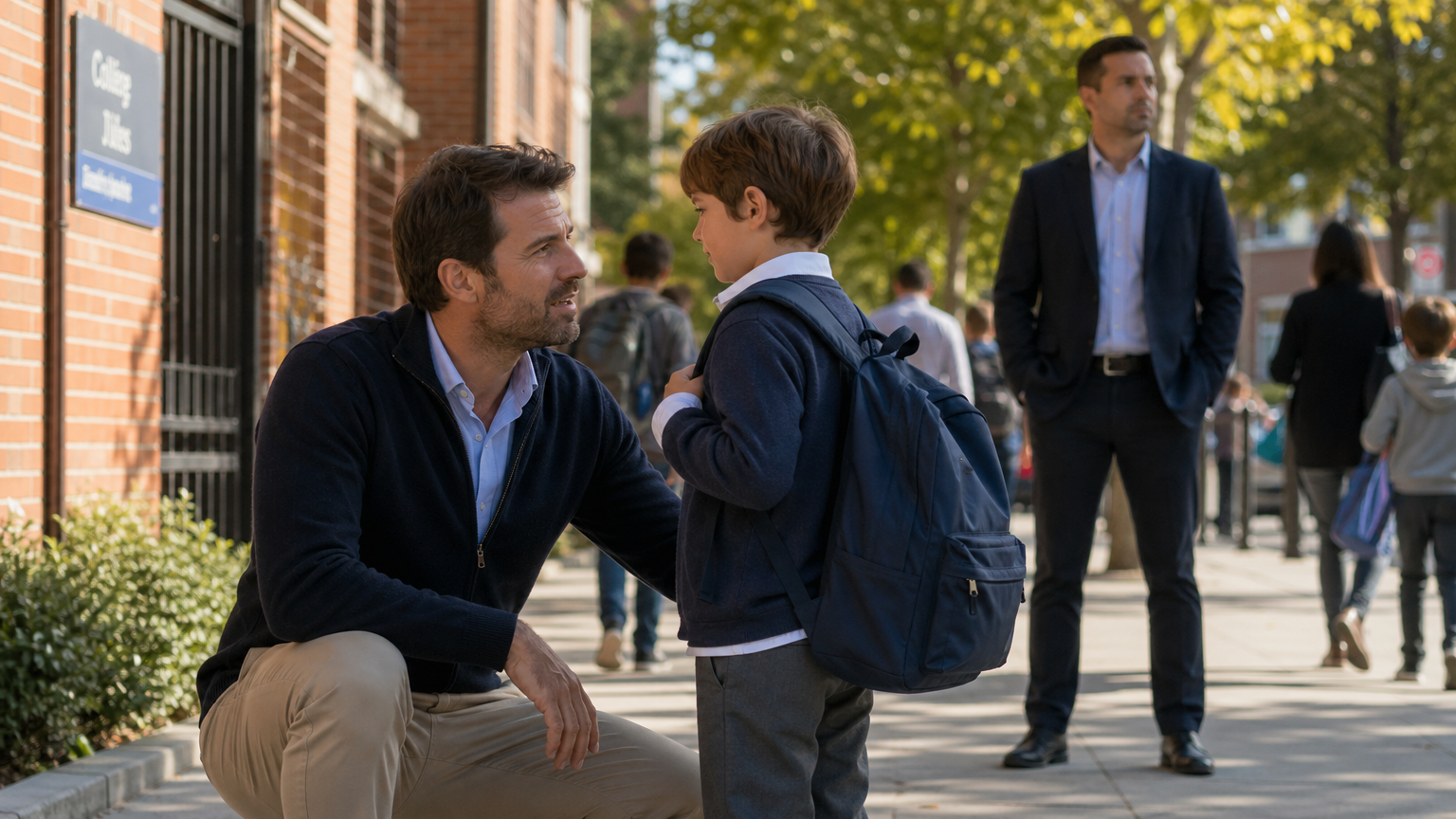
How to talk to your children about risk when you live a public or high‑stakes life
For many founders, investors, and senior executives, life at home and life at work exist in different worlds. One is full of lawyers, advisors, security teams, and complex decisions. The other is full of homework, games, and questions like “Can I go to my friend’s house?”
The tension shows up when your professional reality brings real risk into the family space. Maybe you are going through a difficult divorce, a public dispute, or a period of unwanted attention. You feel the need to tighten security around your children — but you also want them to remain children.
Why “we just don’t talk about it” backfires
A common instinct is to avoid the topic of danger altogether: “They’re too young”, “No need to scare them”, “We’ll handle it”. The problem is that silence does not equal safety. Children are keen observers, and they have more sources of information than ever — classmates, social media, overheard phone calls.
When adults change routines, add new people (like a driver or bodyguard), or become more anxious, children notice. If nobody explains what is happening, they:
- fill the gaps with their own stories, often scarier than reality;
- start to worry but have no tools to manage that worry;
- either shut down the topic or seek excitement in risky ways.
Psychologists emphasize that children respond more to the emotional tone than to the facts. Talking about skills and preparedness, rather than “bad people” and worst‑case scenarios, helps them feel capable instead of helpless.
What risks actually touch executives’ children
For families in high‑visibility or high‑stakes environments, risk is rarely abstract. It typically shows up in a few concrete ways:
- contentious divorces and custody battles where one parent uses access to the child as leverage;
- business disputes that spill into personal space — raised voices at the door, unplanned visits, visible stress;
- attention driven by status or wealth — questions at school, photos taken without consent, gossip in parent chats;
- local safety issues: unsafe routes, opportunistic crime, problematic peer groups.
Executive protection professionals point out that when a principal is a target, their family often becomes part of the risk surface, even if no one intends harm to the child directly. The goal is not to dramatize this, but to acknowledge it and plan accordingly.
Explaining a bodyguard to a child
One of the most delicate moments is the first day a bodyguard or protective escort appears in a child’s routine. If you do not talk about it, the presence of a new adult who “follows” them can feel confusing or frightening.
A more constructive approach is simple, calm, and centered on care rather than danger. For example:
- “Things are busier than usual for our family right now, and there are more people around us. We’ve decided that, for a while, someone will help you get to school and back so it stays calm and easy for you.”
- “This person’s job is not to tell you what to do or to discipline you. They look at the road, the people around, and help if something doesn’t go according to plan.”
- “If anything about how they act makes you uncomfortable, you tell us first. We are the ones who make decisions.”
Well‑run executive protection programs for families are built around that idea: the protector is part of the safety system, not a second parent or a guard tower.
How a bodyguard fits into a child’s daily life
For children, good protection feels like background support, not a constant reminder of risk. Experienced agents working with families aim to stay “half a step back”: they see more than the child sees, but intervene only when necessary.
In practice, this can mean:
- supervising the route from home to school, activities, and back, paying attention to who is around and what patterns emerge;
- being physically present at certain events — games, performances, meetings — when tensions in the adult world are higher than usual;
- coordinating with parents on practical rules: who is allowed to pick the child up, what to do if plans change, how to respond to strangers asking questions.
At the same time, protection strategies differ by age. Younger children may accept a protector more easily, while teenagers often resist anything that makes them feel “different” or watched. That’s where discretion, low‑profile presence, and clear boundaries become critical.
What remains the parents’ job
No level of security can compensate for a home environment where fear is constant and adults are at war with each other. Executive protection can manage physical risk; only parents can create emotional safety.
Key responsibilities on the parental side include:
- presenting a united front on basic safety rules, even if adults disagree on other issues;
- never using security as a weapon in a conflict (“We need this because of what your mother/father did”);
- keeping as much normal routine as possible — school, friends, hobbies, family rituals — so that life is more than the conflict;
- seeking professional psychological support if a child shows persistent anxiety, withdrawal, or aggression.
In other words, protection teams can create secure space and time. What happens inside that space — the tone, conversations, and sense of belonging — is up to the adults closest to the child.
When to treat family protection as a priority
A useful way to think about family security is to borrow the concept of risk assessment from the corporate world. Ask yourself:
- Are there ongoing disputes or public issues that other people might experience as deeply personal and unfair?
- Have there been any direct or indirect threats, unwanted appearances, or attempts to photograph or track family members?
- Do you find yourself regularly worrying about specific everyday situations — the school route, handovers, time at public events?
If the answer is “yes” more than once, it may be time to talk to professionals about a tailored family protection plan — not because your children should grow up in fear, but because they deserve to grow up with adults who take both freedom and safety seriously.