




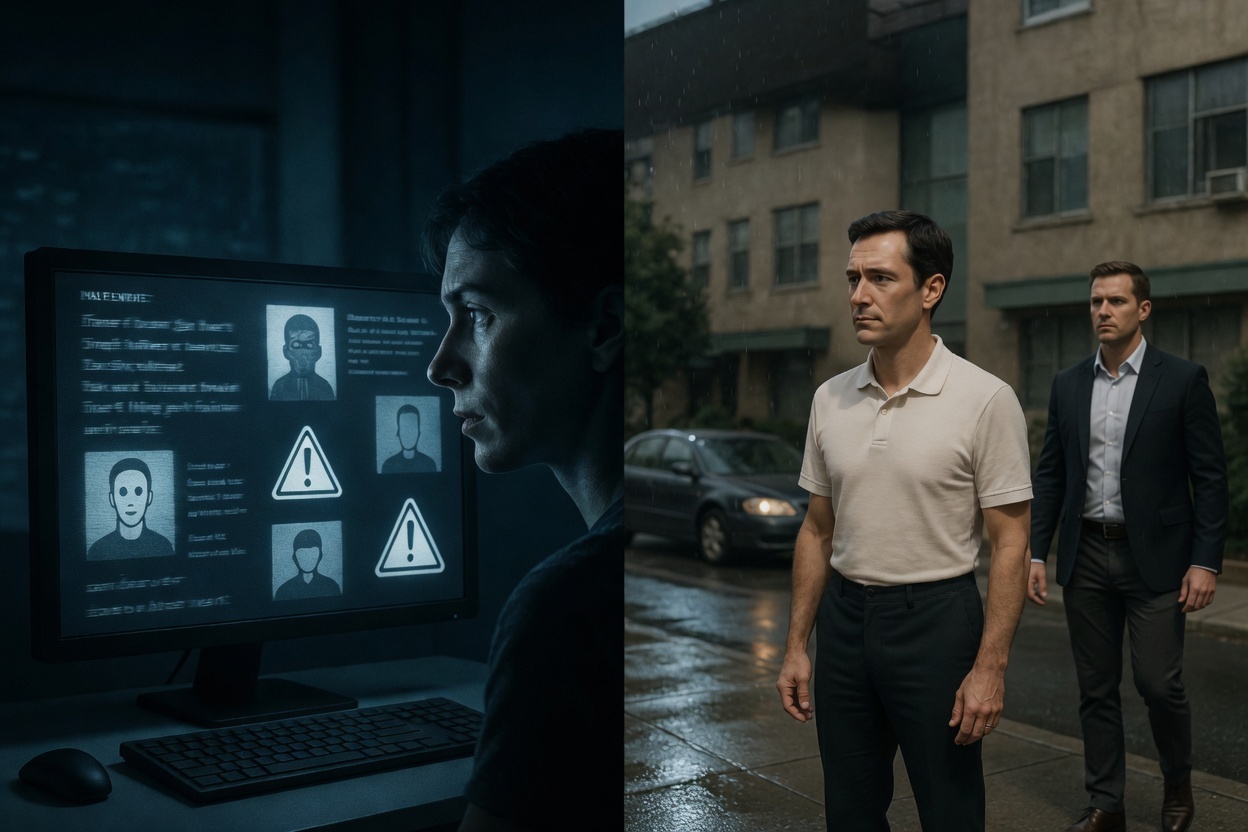
From doxxing to someone at your door
Doxxing and cyberstalking are no longer “just an online problem”. They are a direct bridge from the digital world to your real front door. When someone publishes your home address, phone number, workplace or your children’s school in a hostile context, the risk is no longer abstract — it becomes a question of who might show up, where, and when. Victims report harassment calls, strangers circling their homes, people waiting near the office or “accidentally” meeting them on their usual routes.
Threat intelligence and cybersecurity can reduce exposure and help law enforcement act, but they do not walk you through the parking lot, stand with you in the elevator or make sure your family gets home safely. That gap — between “we know the risk” and “I feel safe leaving my building” — is exactly where personal protection becomes essential.
Why a bodyguard is part of modern online safety
Today, serious online harassment is treated as both a cybersecurity challenge and a public‑safety issue. High‑profile executives, public figures, activists and content creators all face the same pattern: a spike in online hostility, then doxxing, then attempts to pressure them in the physical world.
A bodyguard in this context is not about status or theatrics. It is a way to:
- put a trained professional between you and anyone who decides to move from the screen to the street;
- turn chaotic, emotional threats into a structured risk picture with routes, timings and protective measures;
- give you the freedom to keep speaking, working and showing up in public without feeling you must hide.
In other words, personal protection becomes the physical extension of your digital security posture.
How online and offline protection work together
An effective response to cyber‑enabled harassment has three layers:
- Digital hygiene and threat monitoring.
- Reducing the amount of personal data available online, tightening privacy settings, using strong authentication, and monitoring for new exposures or mentions of your home, family or routines.
- Legal and procedural steps.
- Documenting threats, reporting to platforms and authorities, understanding what legal protection actually exists in your jurisdiction (and its limits).
- Physical protection and executive security.
- This is where a bodyguard or executive protection team comes in: securing your home and building, escorting you on regular routes, controlling access at events, and managing the real‑world side of the threat.
Alone, each layer is incomplete. Together, they turn a frightening, blurry situation into a managed risk.
What “online‑aware” personal protection looks like
For someone under sustained online attack, personal protection is built around your real‑world patterns and the digital threat picture:
- Home and building. The bodyguard treats your entrance, parking, elevator and surrounding streets as potential contact points and adjusts timings, routes and observation accordingly.
- Daily routes. Home–office, school runs, gym, studio — any place where a stalker or harasser can predictably wait.
- Public events. Conferences, meet‑ups, signings, live shows, or appearances announced online in advance — the moments when the online audience can become a physical crowd.
The key difference from “classic” protection is that planning now takes into account what is being said and shared online about you — not just who you are and where you go.
Who needs this convergence of cyber and physical security
This hybrid model — cyber + legal + bodyguard — is increasingly relevant for:
- executives and founders who are visible online and controversial in their industry;
- journalists, investigators and whistleblowers facing coordinated harassment campaigns;
- activists, advocates and community leaders engaged in polarizing topics;
- creators, streamers and influencers with large, emotionally charged audiences;
- anyone who has already been doxxed or cyberstalked and now fears real‑world escalation.
For them, personal protection is not a luxury. It is the missing piece that connects “I have good cybersecurity” with “I can safely walk to my car tonight”.