




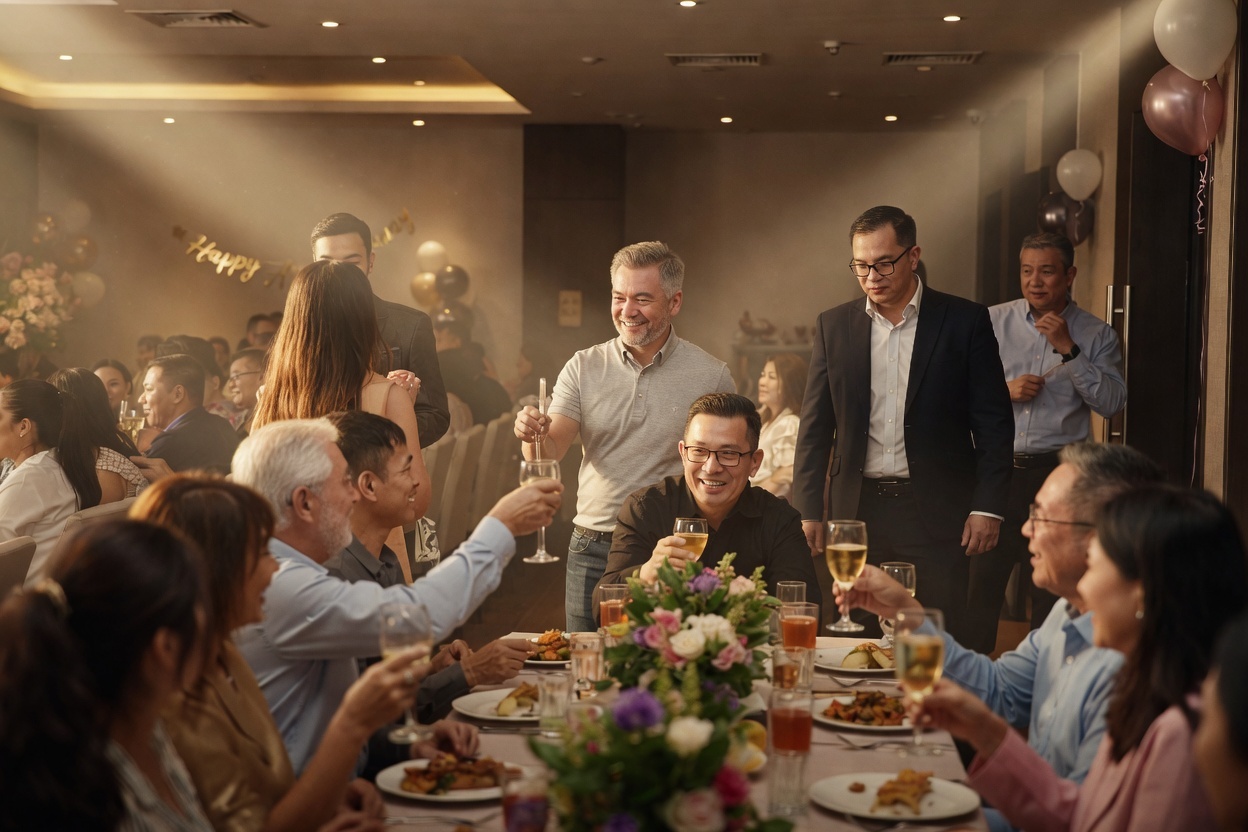
How a bodyguard keeps family events joyful instead of turning into a scandal
Big family events — anniversaries, weddings, milestone birthdays — are rarely just about cake and speeches. They bring together people with long histories of unresolved tension: ex‑spouses, distant relatives, former business partners, adult children with grievances. Add alcohol, money, sometimes status and media presence, and any toast can turn into a trigger.
Security at private events is no longer only about “keeping strangers out”. One of its key tasks today is making sure that a family celebration does not turn into a scandal, a fistfight, or a police case.
Where exactly a party turns into a risk zone
Psychologists and event‑security professionals alike note that tension builds long before the party begins, but erupts at a few predictable points:
- Entrance and cloakroom.
- First contact between people who would rather avoid each other, sometimes already tipsy; arguments over guest lists, attempts to bring uninvited companions.
- Table and bar.
- Old conflicts resurface — about family history, politics, inheritance, money, past betrayals — dressed up as jokes, toasts, or “honest talk”.
- Smoking area or courtyard.
- “Let’s step outside and talk” moments, where discussions slip into shouting and then into pushing or punching, away from the main group.
- Gift and money area.
- A table with envelopes, jewelry, keys, and expensive items — a focal point for theft, suspicion, and accusations.
Families tend to describe these situations as “it just happened”. Professionals see them as scenarios that can either be anticipated and managed — or allowed to escalate.
How professional security works at family events
Standard articles on event security focus on perimeters, metal detectors, and face control. In the context of a family celebration, the priorities are more nuanced:
- Soft face control.
- Security greets guests, checks lists, and politely but firmly turns away those who are not supposed to attend — including ex‑partners or “friends” who show up uninvited.
- Zoning.
- Clear understanding of where the general area is, where only close family sits, where children are, where people smoke; security controls movement between these zones.
- Early detection of conflict.
- Identifying “dangerous combinations”: who sits with whom, who is arguing, who is clearly over‑drinking and looking for a provocation. The goal is to step in while it is still only tension, not violence.
- Respectful removal of guests.
- If someone does not calm down, security follows a protocol: offer to take a break, escort them out, arrange a taxi, involve the police only if necessary.
- Protection of valuables.
- Focus on the gift table, cloakroom, and parked cars, so the evening does not end with “missing envelopes” and mutual accusations.
A dedicated bodyguard can also be assigned to a specific person — the guest of honor, the newlyweds, an elderly parent, or someone at the center of long‑running family drama.
Армада Безопасность at family celebrations
For Армада, a family event is like a small, temporary world with a clear risk map. The on‑demand bodyguard model and event‑security services make it possible to build a flexible configuration tailored to the family.
What Армада Безопасность can do:
- Run a mini risk audit. Learn the format, venue, guest composition, known conflict pairs, expected level of alcohol, presence of valuables (cash, jewelry, equipment).
- Assign a personal bodyguard to a key person. For example, the guest of honor, newlyweds, an elderly parent who may become a target for pressure or manipulation.
- Organize external and internal security. External — perimeter, parking, entrance. Internal — hall, lounge areas, dance floor.
- Agree on clear response protocols. What happens if someone brings an uninvited guest, if a conflict starts, if a fight breaks out, or if something goes missing.
With this approach, “a party with security” stops feeling stiff or pretentious and becomes a natural expression of care: “We want this to be beautiful — and we want everyone to go home safe, not injured or arrested.”
How to explain security to guests without creating tension
Many hosts worry about how to “justify” the presence of security. The framing matters more than the fact itself.
Useful narratives include:
- Service, not fear.
- “We’ll have security to keep things organized: help with parking, manage the entrance, and make sure no random people wander in.”
- Care for elders and kids.
- “We’ll have a lot of older guests and children, plus alcohol. We want everyone to feel safe and comfortable, so the venue is working with security.”
- Protection of valuables.
- “There will be many gifts and expensive belongings. It’s easier to relax when someone is responsible for that area.”
Often you do not even need to label anyone as “bodyguard”. To most guests, security staff will look like venue personnel or event organizers. A personal bodyguard can operate in a low‑profile mode.
When family events really should have security
Not every gathering needs protection. But it becomes a smart decision when:
- people with a history of serious conflict, lawsuits, or physical fights will be in the same room;
- ex‑partners are attending and emotions are still very raw;
- heavy drinking is expected, and some guests are known for “sorting things out” when drunk;
- there will be a lot of cash, jewelry, or other high‑value gifts — especially if there have been thefts at past events;
- guests include celebrities, public figures, or business owners who may attract unwanted attention.
In those cases, Армада Безопасность allows the family to focus on what matters — celebrating together — while professionals handle everything that could tip the evening from joy into chaos.